

 ×
×
×
×
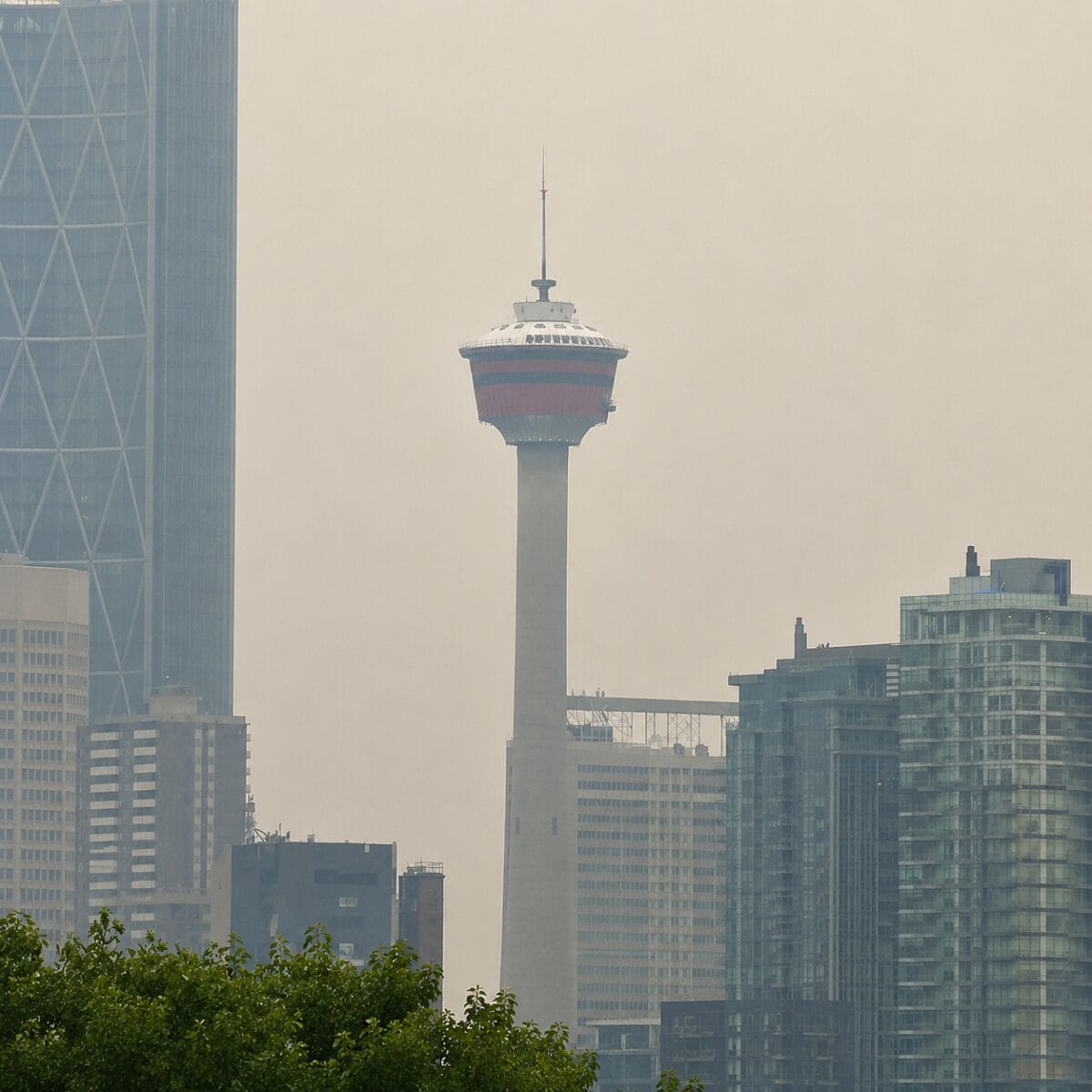
Calgary has a well-earned reputation as one of Canada’s sunniest cities. What gets less attention is what else summer brings: smoke. Over the past several years, wildfire season has extended its reach across Western Canada, and Calgary has found itself under hazy skies more often than most residents expected when they moved here. This July, with air quality advisories already issued for the Calgary and Airdrie areas, it is a good time to talk about what wildfire smoke actually does, what works to protect you, and what condo communities specifically need to think about.
The main health threat from wildfire smoke is not the smell or the haze you can see. It is PM2.5, fine particulate matter with a diameter of 2.5 micrometres or smaller. To give that some context, a human hair is roughly 70 micrometres across. PM2.5 is about 28 times smaller than that, which is why it travels so easily past the body’s usual defences, deep into the lungs and, in some cases, into the bloodstream.
When most people think of smoke exposure, they think of coughing. But the symptoms that appear first are often subtler and easier to attribute to something else entirely. Headaches, unusual fatigue, stinging eyes indoors with windows closed, difficulty concentrating, and a general sense of not feeling well can all be early signs of smoke exposure, even when there is no visible haze inside.
The groups most at risk are children, older adults, pregnant people, and anyone with asthma, heart disease, or other chronic conditions. But it is worth noting that poor air quality affects healthy adults too, particularly when they are exercising or spending time outdoors.
This is where a lot of well-meaning advice falls short. Here is what the evidence actually supports.
Keep windows and doors closed. This one is straightforward, but the follow through matters. Limiting the use of kitchen and bathroom exhaust fans is equally important, as these draw contaminated outdoor air into the home during poor air quality events. The same logic applies to energy recovery ventilators and heat recovery ventilators: these should be temporarily disabled or switched to lockout mode when outdoor air quality is rated as harmful.
Check your HVAC settings. Health Canada recommends recirculating indoor air when outdoor conditions are poor, and bringing in fresh air only when the smoke plume clears or outdoor conditions improve. On most systems, this means switching from fresh air mode to recirculation mode. Keeping the HVAC fan set to “on” rather than “auto” during peak smoke conditions keeps air moving through the building’s filters continuously, even when heating or cooling is not actively running.
Upgrade your filters. Standard furnace filters, typically rated at MERV 8 or lower, are designed for dust and pollen. Wildfire smoke is mostly PM2.5, fine particles 2.5 microns and smaller, and most standard filters cannot catch them. MERV 13 is the residential sweet spot: it captures a meaningful share of PM2.5 without putting excessive strain on most home blowers.
Wear the right mask outdoors. Surgical masks can block the majority of respiratory droplets but are not effective at filtering PM2.5. Properly fitted N95, KN95, or equivalent respirators are what actually provide protection against fine smoke particles. Fit matters as much as the rating: a mask that gaps at the sides offers little protection regardless of its certification.
Condo residents face some considerations that single family homeowners do not. In a multi unit building, the air is more shared than it might seem.
During wildfire events, building HVAC systems should operate in full recirculation mode, meaning zero outside air drawn in through the HVAC system, to reduce the amount of smoke entering the structure. This is a building level decision, not something individual unit owners can typically control on their own. It requires the corporation or its property management company to be paying attention and to take action proactively.
Hallways, stairwells, and parkades can accumulate smoke quickly, particularly if exterior doors are propped open or if ventilation systems are pulling in outdoor air. Common areas are also less likely to have individual HEPA air purifiers running, which means they can become a source of exposure for residents moving through the building.
The Air Quality Health Index published by Environment and Climate Change Canada is the most reliable tool for Calgary residents. The AQHI uses a scale from 1 to 10, with values of 7 to 10 indicating high health risk, and values above 10 indicating very high health risk, a range typically associated with significant wildfire smoke events.
The Alberta government’s wildfire smoke information page also provides near real time air quality data through monitoring stations across the province. The free WeatherCAN app is a practical option for getting current Calgary readings and customized air quality notifications on your phone.
A simple rule of thumb on days when smoke is visible: if conditions change rapidly, check the AQHI before going outside. Smoke concentrations can shift significantly from hour to hour, particularly as winds pick up or change direction.
At UrbanTec, we support condo communities across Calgary and Airdrie through every season, including this one. If your building has questions about ventilation protocols, filter upgrades, or how to communicate with residents during air quality events, we are glad to help. Reach our team at hello@urbantec.ca, 403.971.1511, or at urbantec.ca.
This article provides general health and building information and is not a substitute for medical advice. For health guidance specific to your situation, consult Alberta Health Services or your physician.